
Al-Aqsa Flood: political will rooted in steadfastness
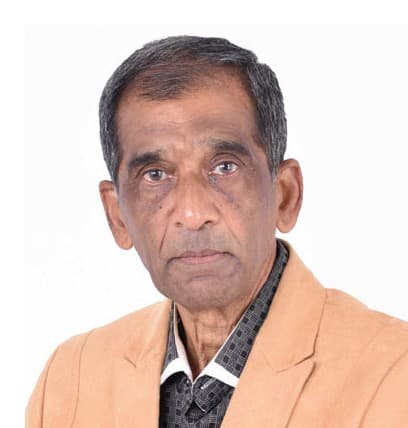
By Haroon Aziz, South Africa
The centrality of Al-Aqsa Masjid
Operation Al-Aqsa Flood, with the centrality of Al-Aqsa Masjid, is an original historic epic written by Gazans with their blood, flesh, and bones.
The Gaza war brought out the opposites of Zionist military aggression and the social cohesion of Gazans – in spite of the rubble or enkaat (Arabic word of anger). It is a lesson in unity.
It also brought out the primordial compassion of humanity through international solidarity actions. According to Hamas Media Office, European civil society staged 45000 while its USA counterpart staged 12400 protest actions. There were uncounted number of protest actions in Africa, Latin America, Asia, and Australia.
Palestinians are historically absorbed in the struggle to liberate themselves. Their actions are characterized by the Quranic principle of sumud or steadfast perseverance.
They know that they are the primary facts of historical change and that the international solidarity forces are secondary factors. Powerful forces with material interests in settler-colonialism are tertiary nuisance factors.
Al-Aqsa Masjid symbolizes steadfast perseverance.
The Israeli coalition government and the ineffective UN
In 2022 the extremist coalition government of Israel decided to storm Al-Aqsa Masjid and Zionize Al-Quds (Jerusalem) and the West Bank. It was part of the process of increasing Zionist settlers in the West Bank from 280000 in 1993 to 950000 in 2023. It was like the replication of spatial White Group Areas in Apartheid South Africa.
After enduring the restrictive borders for 75 years, 1180 ineffective UN resolutions, and the toy telephone of Oslo communications Al-Aqsa Flood breached the perimeter fence and took the war into the complacent zone of Israeli revelry. It shifted from a war of position to a war of manoeuvre.
Why is Al-Aqsa Masjid central to Al-Aqsa Flood?
There are two answers: one is the immediate operational answer; the other is the ultimate historical answer.
The immediate answer, according to Hamas Media Office: on 1 October 2023, i.e., one week before the Al-Aqsa Flood operation Shin Bet had planned to eliminate Hamas leaders within the context that the Gaza Strip or Qita’Ghazza was suffocating under a 17-year military siege, with 1600 military orders. It was characterized by the deprivation of ‘their most basic rights to movement, travel, and normal life, and access to essential goods’. It was their ‘punishment’ for having democratically elected Hamas as the governing party. Ghazza had become ‘the world’s largest open-air prison’. There were 5000 prisoners in Israeli jails who ‘suffered all forms of repression, abuse, humiliation, and slow death, with no political horizon for their release.’ It was also within the larger context of the UN paralysis to perform on its resolutions, which meant the exhaustion of all peaceful means of struggle.
The ultimate historical answer
The Holy Qur’an provides the primary source of decolonial history.
The Quran has three chapters with direct reference to Al-Aqsa Masjid and Al-Quds. In the chapter, The Night Journey 17:1 it reads, ‘Limitless in His Glory is He who transported His servant (Prophet Muhammad) by night from the Inviolable House of Worship (at Makkah) to the Remote House of Worship (at Al-Quds) – the environs of which We had blessed.’
The blessed environs of Al-Quds consist of: an area of 126-million square metres; four walls of 4km in length and 12meters in height; seven gates; Al-Aqsa Masjid; Dome of the Rock; Muslim, Christian, Jewish, and Armenian residential areas; and businesses, school, and museum – as the original city-state.
The centrality of Al-Aqsa Masjid
Al-Aqsa Masjid is central to Al-Quds, which is central to Palestine, which is central to Bilad as-Shams, which is central to West Asia, which is central to the anti-Zionist, anti-colonial, and anti-imperialist struggle – from Latin America to Africa to Asia.
The Al-Aqsa Flood began in 1920 in waves of various heights and force.
Al-Aqsa Masjid as the House of Purification
Prophet Muhammad (ś) referred to Al-Aqsa Masjid as Bayt al-Muqaddas or the House of Purification. Bilad as-Shams or the Land of the Sun extends from Palestine and the Mediterranean Sea to the Jordan River, Jordan country, Syria, Golan Heights, Lebanon (partly), and Iraq (partly). It is the birthplace and burial ground of many prophets and spiritual notables. The Sun symbolizes purification.
Attacks on Al-Quds
The UN on 29 November 1947 adopted the proposal that Al-Quds (Jerusalem) be placed under international administration in the custody of Jordan. UNSC Resolution No.478 declared the 1980 ‘Jerusalem Law’ of Jerusalem being the capital of Israel null and void. Therefore, no country is supposed to have an embassy in Jerusalem.
The attacks on Al-Quds include military invasion; 1969 arson attack; the 2014 invasion of Al-Aqsa Masjid by 10926 Zionists; ‘Jerusalem Law’; digging of underground tunnels and excavations directly under the foundations of Al-Aqsa Masjid; and a contrived Zionist archaeology.
In May/Ramadan 2021 IDF and Zionist ‘civilians’ stormed Al-Aqsa Masjid for the umpteenth time. They beat, attacked, and dragged worshippers – from the young to the elderly – with their boots on.
Sumud as a catalyst of liberation
There is a spiritual inward struggle that drives Muslims in the outward struggle for liberation. It is sumud. Steadfast is repeated fourteen times and perseverance, thirty-two times in the Quran. They are coupled with qualities such as patience and constancy. It is inerasable from Muslim hearts, minds and emotions, which constitute the chemistry of belief. The quality of a catalyst is that it increases the rate of chemical reaction without itself undergoing any permanent chemical change. It is constant. It explains their ever-expanding capacities and capabilities for resistance.
The Palestinian National Council’s Political Communiqué of 15 November 1988, issued in Algiers, observed, “Our people’s heroic steadfastness (sumud) has cost them hundreds of martyrs and tens of thousands of casualties, prisoners, and exiles.” It also stated that “our children of the revolution…rose to demonstrate the dynamism and continuity of the revolution…and their faith is too deep to uproot.”
Sumud prefigures purification
The chapter, As-Shams (The Sun): 91:9 reads, ‘Truly he succeeds that purifies it (the soul).’ ‘Success’ is defined as the purification of the soul. The definition is spiritualistic and not materialistic.
East Roman World in Medieval Mediterranean
In the period 476 CE to 1204 CE there were major historical developments: Greek colonialism had colonized cities in southern Italy and called it Magna Graecia or Greater Greece. In 476 CE a Germanic King deposed and replaced the Roman Emperor. He formally acknowledged the overlordship of Augustus ruling from Constantinople (Istanbul). Emperor Justinian (535-554 CE) militarily formalized the overlordship into real domination and ‘Italy became an outlying province of the Eastern Roman Empire.’ The dominant characteristic of this early period was that the ‘flow of people, goods, and political control was very definitely from East to West, from a dominant Byzantine eastern Mediterranean into Italy.’ (Greater Israel and Greater Living Space! [Lebensraum] are echoes of Greater Greece.)
In 1071 CE adventurers led aggressive campaigns from southern Italy into Greece, which culminated in 1204 CE when western ‘Crusaders’ in alliance with Venice as the new maritime power sacked Constantinople itself and established Roman dynasty of emperors in the East Roman capital. The ‘spoils from Constantinople flowed into Venice’, which are on display in the Treasury and built into the exterior of San Marco. More ‘adventurers from Italy…flocked eastwards in search of land and office’. It included the first Latin Patriarch of Constantinople. The flow of war spoils increased in the 7th and 8th centuries when Islam was enjoying increased acceptance.
The flow of commodities from the East to West
The flow of commodities included slaves, cultural artefacts, wine, oil amphorae, agricultural and manufactured products, building materials, marble columns, liturgical fittings of famous churches, and raw materials. The early wealth of Venice and Amalfi on the Italian coast was based on the exploitation of these commodities.
‘The slow growth of Western trading settlements in the eighth, ninth, and tenth centuries is often lauded as the origin of West European prosperity, but it is worth remembering that initially this prosperity was substantially based on human misery.’
The papal monarchy contested for political and economic power when it shifted from the East Roman Empire to West Roman Empire under the ideology of Western Roman Catholicism (in Latin liturgical language) against Eastern Orthodox Church (and Cyrillic liturgical language). Language shifted mindset. Ideology dovetailed into the new Western reality.
‘Rome was an extreme, indeed unique, case of all power eventually flowing into the hands of its bishop…an incremental rise in episcopal power.’ The power of the bishops increased ‘as their landed endowment grew through pious donations.’
(Citation: Italy and the East Roman World in the Medieval Mediterranean – Empire, Cities and Elites 476-1204 CE: Edited by Thomas J. MacMaster and Nicholas S.M. Matheou: Centre for Byzantine, Ottoman and Modern Greek Studies: University of Birmingham: Routledge.com accessed 1 January 2026)
“Palestian Christians in the shadow of Zionism and Christian Zionism”
“Who are Palestinian Christians? We are the first Christians. We are the descendants and heirs of the first church in Jerusalem. Christianity did not start in Europe. Christianity started in Palestine. Jesus was born in Bethlehem – not in Rome. He was (brought up) in Nazareth…He was crucified and raised in Jerusalem. The first Christian community was in Al Quds, Jerusalem. Christianity is not a Western religion. Yet in the USA and Europe Christianity is often spoken of as a part of ‘western civilization’…When we hear this as Palestinians, we feel erased and deeply disrespected because Christianity was born in the East, in our land among our people and not in the West. For nearly 2000 years Palestinian Christians have survived different empires; empires came and went and we remained. Very few people know this that we were a majority in Palestine up until the times of the Crusade – that was when many of us were killed or left. During the Crusade local Christians did not side with the Crusaders. We fought alongside Arabs and Muslims against them…because the Crusade was not about faith but about power, land, supremacy.”
(Kutbah delivered by Rev Dr Munther Isaac at Masjid al-Quds, Cape Town, South Africa on 2 January 2026. He is the Director of Bethlehem Institute of Peace and Justice in Palestine.)
Prophet Muhammad and the struggle against Roman Colonialism
Prophet Muhammad (ś) devoted his creative organizing energy to rigorous research by travelling to far-off places of historic interest in Bilad as-Shams in search of evidence of the truth. He coupled and sustained his research activities with his trading activities.
About the first 140 years of the Greek/Roman period (476-1204 CE) provided the historical context to the revelation of Surah Al-Rum (The Roman Empire). In Verse 42 the Quran commands, ‘Go all over the earth, and behold what happened in the end to those (sinners) who lived before you…’ This is exactly what the Prophet had done in his research travels. In 613-614 CE the Persians had demonstrated that the Romans were vulnerable to defeat in Damascus and Jerusalem. In 615 or 616 the defeat of the Roman Empire seemed imminent. Verse 41 prophesied the defeat of (the Romans) because ‘corruption has appeared on land and in the sea as an outcome of what men’s hands have wrought: and so, He will let them taste (the evil of) some of their doings…’
It was with a very rational mind that he had made a niyyat or sacred intention to lead an army into Bilad as-Shams to defeat the Roman occupation forces. But death curtailed his sacred intention and it fell upon his companions or comrades to fulfil his intention.
History places its weight on people. Only the people who deliberately gain the strength to bear the weight are the ones who are victorious.
Conclusion
Today a new Roman Empire (USA imperialism/Zionism) with its octopus head sits on Al-Aqsa Masjid with its poisonous tentacles spread all over Bilad as-Shams – over-extending themselves to Iran, Kazakhstan, Uzbekistan, Afghanistan, South China Sea, Greenland, Arctic Circle, Nigeria, DRC, South Sudan, Libya, South Africa, Cuba, Colombia, Nicaragua, Venezuela, and more of Planet Earth.
7 January 2026