COP30: climate justice is material to all civilizations
By Haroon Aziz, South Africa
Introduction
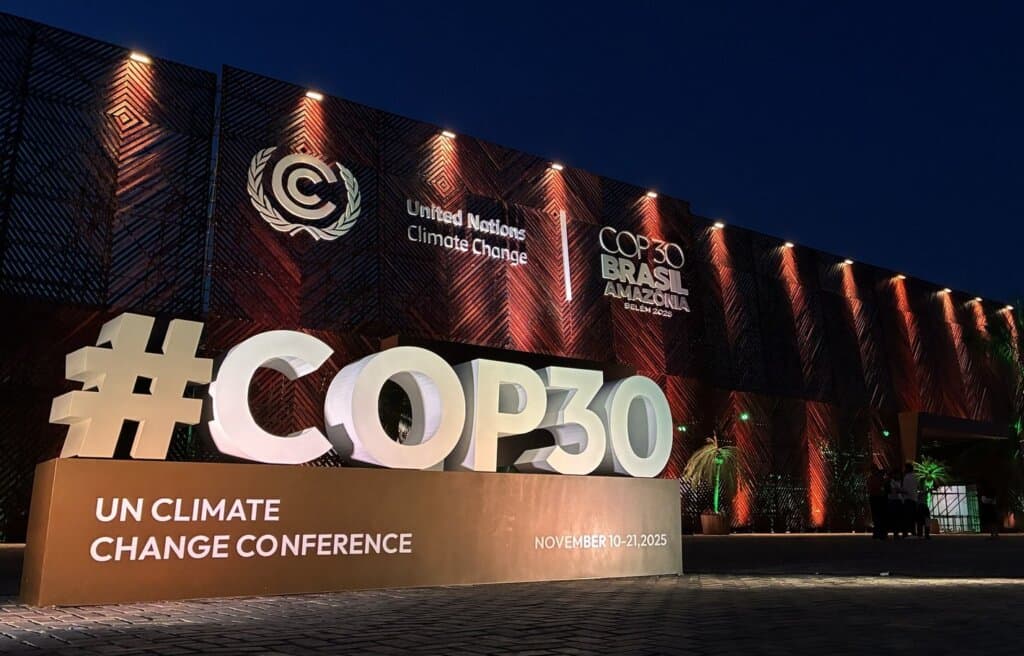
COP30 Belem, Brazil 2025 produced a voluntary ‘Action Agenda’ for civil society, governments, businesses, and others to intensify ‘climate adaptation’, emission reductions, and transition to sustainable economies. It has its legal basis in COP21 Paris Agreement 2015.
Mother Earth and human labour are the parents of wealth. They are the material foundation of all civilizations. They make climate justice the ecology of civilizations.
Human beings as trustees of nature
But as the planet is filled with trustees of nature made up of competing classes, races, tribes, clans, ethnicities, nations, and castes there are contradictions and complementarities. The Paris Agreement reflects the relative complementarities that transcend underlying contradictions. Climate finance and lack of political will are the biggest obstacle to keeping global warming to less than 1.5C. Humanity’s fiduciary responsibility for nature is diminished.
In consideration of the contradictions, the historic Paris Agreement is a relative achievement in international regulations but it cannot be enforced, in spite of its legal basis.
Big Oil versus civil society
The contradictions may be captured as Big Oil articulating the limits of legal and economic obstacles while civil society articulates the power of their determination to restrict global warming to less than 1.5C.
According to “ActionAid Fund Our Future 2024 Report,” only 2.8% of global climate mitigation funds from multilateral sources are allocated to ‘just transition’ efforts. The Green Climate Fund is marginal to mainstream climate finance.
In the period between COP29 and COP30 Big Oil approved $250-billion for new oil and gas projects. Hence, the cry “Kick all Big Polluters Out. Kick Israel Out’ and ‘There is no climate justice without Palestine liberation.’ Palestinian flags waved in every corner. The Gaza Genocide distils the essence of all colonial and imperialist genocides because of the greed for wealth that threaten all civilizations.
The struggle for just transition
The struggle for just transition dates back to the 2015 Paris Agreement. It is led by the Climate Action Network International (CAN), which represents 1900 civil society organizations in more than 130 countries for climate justice within the wider struggle for social justice. It convenes and coordinates civil society at the UN climate talks. It has widened the democratization of the struggle for climate justice beyond institutions and governments. It is planetary democracy.
It has brought the world closer together, in spite of the volatile mixture of economics, politics, science, and spirituality. As Big Oil is the primary cause of climate disaster, CAN seeks to end their social licence to destroy the planet in order to increase corporate profits, people’s poverty, and extinction of plant and animal species.
Mother Earth and its pulse points
Mother Earth has many pulse points to measure her health and ill-health. The Amazon (6-million square kilometres), which is the world’s largest rainforest has had 17%-20% of it destroyed by human hands over the past 50 years. The major part of the deforestation has occurred in Brazil followed by Bolivia, Colombia, Ecuador, Guyana, Peru, Suriname, Venezuela, and Guiana, which constitute one of the largest lungs in the world.
The indigenous people of the Amazon Rainforest
Four hundred indigenous groups of the Amazon Rainforest are the responsible users and keepers of its land through sacred indigenous knowledge systems and ancestral technologies. They are culturally skilled in the management of water and carbon cycles, biodiversity, and greenhouse gas emissions – led by women as cultural custodians of local knowledge.
Their indigenous dress culture symbolises nature with seeds, plants, feathers, and beads. Their chants are those for justice, infused with ecological wisdom and the human-beings-and-nature reciprocity. They are always in the frontline of fighting for land rights as human rights. They are the first responders to the onset of climate change. They resist the imposition of foreign food culture such as rice, beans, and pasta. They struggle for their right to staple food such as cassava, banana, and pineapple.
River-boat flotillas
About 5000 indigenous people sailed to Belem in 200 river-boat flotillas with the message that carbon markets, blue economy schemes, and nature-based off-sets are false climate solutions. They asserted that their ancestral knowledges and practices provide sustainable prevention and solutions. Some travelled a distance of 3000km and some over nine-day river-and-road journey. There was also the Laracu Scientific River Caravan, which is a collaboration between ten academic institutions in France and Brazil. There was a convergence of indigenous and scientific knowledges.
A divided COP30
While COP30 was habitually divided over financial shortfalls and trade measures it achieved notable outcomes of ‘just transition’, dubious metrics to track ‘climate adaptation’ efforts, and voluntary ‘roadmaps’. It adopted the ‘Belem Action Mechanism for a Global Just Transition’ (BAM). The contestation over fossil fuels, finance, and trade brought out economic nationalisms and insular protectionism of Big Oil countries.
There were tensions between the Saudis and the Europeans over Europe’s effort to control Saudi natural resources, mainly, fossil fuels. The tensions date back to 2023.
The struggle for climate finance
The poorer nations failed to influence the tripling of the prior $40-billion commitment to provide grants and cheap finance to cope with global warming. The text reflected the compromise position with ‘calls for efforts’ to do so by 2035.
At COP29 only $720-million was raised for the “Fund for Responding to Loss and Damage” to compensate poor nations for climate-induced disasters instead of the needed $1.3-trillion per year. In contrast, the world spends $2.7-trillion on war alone every year.
“Tropical Forest Investment Fund” (TFIF)
COP30 established TFIF as a financial mechanism to invest borrowed capital of $125-billion, whose projected profits of about $4-billion to be paid to the financialized and profit-oriented ‘Tropical Forest Forever Facility’ (TFFF) for interest-bearing loans to countries with tropical forests in the Global South. Governments, banks, and big conservation NGOs have praised the concept. The World Bank is the likely host of TFIF and TFFF, which are distraction from the $1.3-trillion needed to pay for the costs of climate damages. But outside of COP30, 220 entities associated with the ‘World Rainforest Movement’ have signed a Statement (17 November 2025) opposing the neo-colonial TFIF and TFFF project.
UN Mutirao Declaration 2025
At COP30 there were 1602 unelected Big Oil lobbyists and 40000 elected delegates and 195 parties to the Mutirao Declaration – “Uniting humanity in a global mobilization against climate change”. (Mutirao is Portuguese for collective action.) In spite of the imperfections of the COPs, they are a democratic space for robust engagements globally. They have stimulated the organic growth of an international mass movement, which has to be kept alive to struggle for climate justice within the context of the struggle for social justice with ecological characteristics.
They include quilombola or the descendants of former enslaved Afro-Brazilians who had fled from slave plantations, babassu coconut breakers in the Amazon region of South America, and terreiro people of the urban and peri-urban areas of Salvador in Bahia who practise ancestral spirituality. As the institutional residue of Black slavery still intrudes into modern civilizations such people have to be mobilized and brought out from the peripheries into the new revolutionary mainstream. They can devolve their ancestral wisdom of climate justice on modern people.
Mainstreaming peripheral communities
COP30 is also enriched by the experiences of the “International Movement of People Affected by Dams” (MAB), which is a grassroots organization made up of social activists who transcend racism, classism, sexism, religion, and political party affiliation. They aim to uproot the unjust structures of society.
The peripheral communities suffer from a special form of racism, viz., environmental racism, which deepens poverty. They like all the other former colonized need to struggle for reparations from their former colonizers and transnational corporations.
The UN has a treaty with 26 South American countries called “Regional Agreement on Access to Information, Public Participation, and Justice in Environmental Matters in Latin America and the Caribbean,” signed at Escazu in Costa Rica on 4 March 2018. It also applies to peripheral communities and can be used as an additional instrument in the struggle for climate justice and claim reparations.
Another UN treaty that applies to peripheral communities worldwide is called “UN Declaration on the Rights of Peasants and Other People Working in Rural Areas” (28 September 2018). This, too, can be leveraged to struggle for their worker rights as human rights and be brought into the mainstream revolutionary movement.
Kyoto Protocol 1997 and militaries
At the Kyoto Protocol 1997 the USA made the final demand to exempt militaries from reporting on emissions from multilateral operations involving more than two countries and also to exempt ships and aircrafts involved in international transport. This licensed the USA not to track and report its overseas emissions to the UN. There was no onus on the USA Army to develop the requisite methodology. The other militaries were also exempt. The USA did not ratify the Kyoto Protocol.
The 2015 Paris Agreement did away with automatic exemption but left the choice to individual countries and remained silent on what exactly to report. The crisis of COPs is rooted institutionally in this exemption because the militaries collectively are the biggest polluters in the world. The UN says that should the emissions be reported it should be categorised as “Non-specified”. It also applied to civilian waste incineration, which made it impossible to separate the military from civilian waste.
The Kyoto Protocol and Paris Agreement are structured to be inefficient through conflict of interests and inadequate finance. Big Oil evades prosecution for environmental crimes.
The self-favouritism of USA army
Since the notorious ‘Global War on Terror’ in 2001 the USA military produced more than 1.2-billion metric tons of greenhouse gases. It accounts for about 80% of the federal government’s fuel consumption. In 2018 the military owned about 585000 facilities – spread over 27-million acres in 160 different countries. In 2013 the Pentagon building alone emitted more than 24000 metric tons of carbon dioxide equivalent. Of the 100-million gallons of fuel the Defence Logistics Agency bought in 2018 about 70-million gallons were jet fuel. The controversial F-35 jet fighters burn about 5600 litres of fuel per hour. (US Military Emits More Carbon Dioxide: Sonner Kehrt: Inside Climate News: 18 January 2022)
Iran, by contrast
In just twelve days of war on Tehran city by USA/Israel in June 2025, 50000 tons of greenhouse gas was emitted into the atmosphere. In addition, there were severe environmental and human damages. In contrast, the Pentagon building alone emits twice the volume over 24 months. Had the USA Thaad missiles succeeded in busting Iran’s nuclear reactors the damages would have been as unimaginable as Gaza Genocide and Hiroshima and Nagasaki of WWII.
Ms Shina Ansari, Vice President and Head of the Department of Environment of the Islamic Republic of Iran, in addressing COP30 stated Iran’s determination to meet its climate commitments. After presenting Iran’s environmental achievements and challenges she emphasised the need for collective and fair global action to fight the climate crisis – in spite of the illegal sanctions imposed on Iran by USA and its sub-imperialist cohorts. She concluded her speech by saying, ‘We are heirs to one Earth and one destiny and must act with respect and fairness to leave a sustainable legacy for future generations.’
Conclusion
The search for evidenced-based human causes of climate change began in 1988 but the actual evidence was produced at the 1995 Madrid IPCC meeting. It revolutionised the perspective on climate change. Still, thirty years later, an agreement on fossil fuels remain unattainable. Forums for action outside of COP30 are being established. Only 62 of the 197 parties had submitted their voluntary ‘Nationally Determined Contributions’, which indicate that the world is set to warm by 2.3-2.5C by the end of the 21st century. One explicit concession was made ‘to transition away from fossil fuels in a just, orderly, and equitable manner.’
COP30 failed to mobilize commitment to climate finance of $1.3-trillion per year for developing countries to mitigate for climate-related damages. Instead a new target of $300-billion was set for developed countries by 2035.
Should there be a gap between pledges and financial flows that threaten all civilizations?
2 Dec 2025